
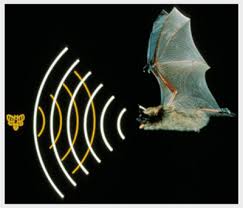
Bats use sound not just to communicate but also to “see” in complete darkness. This incredible ability is called echolocation, and it’s so precise that bats can catch insects smaller than a grain of rice while flying at high speed.
Let’s explore how bats turn invisible sound waves into a powerful survival weapon.
1. Echolocation: Seeing With Sound
Most bat species are nocturnal, meaning they hunt at night. But darkness is not a problem for them. Bats emit high-frequency sounds (usually too high for humans to hear). These sound waves travel through the air, bounce off objects, and return to the bat as echoes.
From the echo alone, a bat can detect:
The size of an object
Its distance
Its speed
Its direction
Even the texture of the insect’s wings
It’s like having a built-in radar system — precise, fast, and reliable.
2. Why Sound Works Better Than Sight for Bats
Most insects bats hunt are active at night. If bats depended on eyesight alone, catching tiny flying insects in the dark would be nearly impossible. Sound solves this problem.
Using sound, bats can:
Hunt in total darkness
Avoid obstacles such as tree branches
Navigate narrow caves
Detect prey hiding near leaves
Their sound system is often more accurate than human eyes in daylight!
3. Different Bats Use Different Calls
Not all bats echolocate the same way. Some use extremely high frequencies to detect tiny insects. Others use lower frequencies to detect bigger prey like frogs or small birds.
Some species even adjust their sounds depending on the environment:
Cave bats use louder calls because sound bounces around the walls.
Forest bats use softer, shorter calls so echoes don’t get confused by many objects.
This adaptation makes them expert hunters in any environment.
4. Bats Use Sound to Communicate Too
Echolocation is mainly for navigation and hunting, but bats also “talk” to each other using sound. They use different calls for:
Warning others
Mating
Finding their group
Expressing danger
Some species have over 20 different communication sounds.
5. Echolocation Helps Bats Avoid Predators
Owls, hawks, and snakes hunt bats — but echolocation gives bats an advantage. With sound, they can sense incoming danger before it’s visible.
But here’s the twist: some predators have evolved to counter it.
For example:
Some moths can hear bat sounds and quickly change direction to escape.
Some insects create clicking noises to confuse bat echolocation.
It’s a nighttime survival war — sound vs. counter-sound!
6. Humans Learned From Bats
Echolocation inspired human technology such as:
Sonar (used in submarines)
Radar
Medical imaging techniques
Navigation tools for blind individuals
Nature taught us long before machines existed.