Snakes are some of the most misunderstood animals on the planet. Many people panic as soon as they see one — but not all snakes are dangerous. In fact, the majority of snakes are completely non-venomous and harmless to humans.
Still, knowing how to recognize a venomous snake just by appearance can help you stay safe when exploring nature.
Here are the main visual signs that can help you identify if a snake may be venomous.
1. Head Shape: Many Venomous Snakes Have a Triangular Head
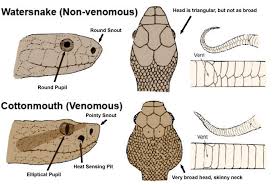
While not a perfect rule, many venomous snakes (like vipers) have a triangular or arrow-shaped head.
Why?
Venom glands sit behind the eyes
This makes the head wider and more angular
Non-venomous snakes usually have a more narrow, rounded head.
⚠️ Warning:
Some harmless snakes can flatten their heads when threatened to imitate venomous ones — so use this clue along with others.

2. Eye Shape: Vertical Pupils vs. Round Pupils
Eye shape can help you distinguish:
Vertical slit pupils → Often venomous (especially vipers)
Round pupils → Usually non-venomous
This is similar to how cats have slit pupils while harmless animals like goats have round ones.
But note:
Some venomous snakes (like cobras) have round pupils too.
3. Color Pattern: Bright Colors Often Mean Dange
Some venomous snakes use bright warning colors:
Red
Yellow
Orange
Black bands
In some regions, certain color patterns signal danger.
Example (America):
“Red touching yellow, kills a fellow. Red touching black, friend of Jack.”
But this rule does NOT apply worldwide.
Still, bright contrasting colors are a strong warning signal in nature.
4. Body Shape: Thick-Bodied Snakes Can Be Venomous
Many venomous species — especially vipers — have:
Shorter bodies
Thick midsections
Large, muscular heads
Meanwhile, harmless snakes often have:
Long, slender bodies
Thin, smooth appearance
5. Look for a Heat-Sensing Pit (Pit Vipers)
Pit vipers (like rattlesnakes) have a pit between the eye and nostril.
This hole lets them sense heat from prey.
If you see:
Eye
Heat-sensing pit
Nostril
…in that order → the snake is almost certainly venomous.
6. Tail Clues: Rattles and Abrupt Tails
Some venomous snakes give you easy signs:
Rattlesnakes have a clear rattle on the tail
Many venomous snakes have a sharp, sudden tail ending
Non-venomous snakes tend to have gradually tapering tails
7. Behavior: Aggression Doesn't Always Mean Venom
Behavior is NOT a perfect sign, but often:
Venomous snakes tend to:
Stand their ground
Lift their heads to strike
Make warning displays
Non-venomous snakes often:
Flee immediately
Play dead
Puff up to look dangerous
Important: Myths You Should NOT Follow
Some old methods are WRONG and dangerous:
❌ “All venomous snakes are brightly colored.”
❌ “Only snakes with big fangs are venomous.”
❌ “Venomous snakes always hiss.”
❌ “Small snakes are harmless.”
Many deadly snakes are dull and quiet — and some harmless ones are colorful.
The Safest Rule: If You’re Not Sure, Stay Away
Even experienced wildlife experts can be fooled.
The safest action is always:
Do not touch, pick up, or corner a snake.
Keep a safe distance and let it go its way.
Most snakes only bite when threatened.