Most plants quietly make their own food using sunlight…
But a special group of plants decided to break the rules.
They hunt.
Carnivorous plants are some of the most fascinating organisms on Earth. Instead of relying only on soil nutrients, they trap and digest insects — sometimes even small animals — to survive in poor environments.
Here’s how these incredible plants work, why they evolved this way, and the most famous insect-eating plants you should know.
Why Do Some Plants Eat Insects?
Carnivorous plants usually grow in places where the soil is very poor in nitrogen, such as:
Swamps
Bogs
Wet sandy areas
Acidic marshes
To get the nutrients they can’t absorb from soil, they evolved traps to capture insects and extract proteins from them.
This gives them the energy boost they need to grow and reproduce.
Below is Most Famous Plants That Eat Insects
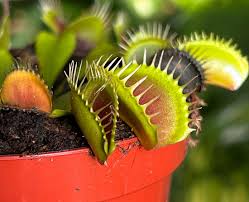
1. Venus Flytrap (Dionaea muscipula)
The superstar of carnivorous plants. Known for its jaw-like traps.

2. Tropical Pitcher Plant (Nepenthes)
Some species can trap mice and small reptiles — not only insects!

3. Sundew (Drosera)
Beautiful but deadly. Sticky leaves act like natural flypaper.

4. Butterwort (Pinguicula)
Slimy leaves that trap mosquitoes and tiny flying insects.

5. Bladderwort (Utricularia)
The fastest trapping plant in the world — can snap in 1 millisecond.

How Do Carnivorous Plants Capture Their Prey?
Each species uses a different technique. Their traps are beautifully designed:
1. Snap Traps
Example: Venus flytrap
These plants have quick-moving leaves triggered by tiny hair sensors.
When an insect touches the hairs twice, the trap shuts like a mouth.
2. Pitcher Traps
Example: Nepenthes (Pitcher plant)
These have deep, slippery cups filled with digestive fluid.
Insects are attracted by smell, fall inside, and can’t climb out.
3. Sticky Traps
Example: Sundew
Covered in sticky droplets that look like nectar, these plants glue insects to their leaves and slowly curl around them.
4. Suction Traps
Example: Bladderworts
Underwater traps that create a vacuum.
They suck in small aquatic insects at incredible speed.
5. Lobster-pot Traps
Example: Corkscrew plants
They guide insects into one-way tunnels where escape is almost impossible.
How Do These Plants Digest Insects?
Once an insect is trapped, the plant releases digestive enzymes that:
Break down the insect’s body
Absorb nutrients like nitrogen and phosphorus
Leave behind dry shells
This digestion can take hours to days, depending on the species.
Where Are Carnivorous Plants Found?
Surprisingly, carnivorous plants grow all around the world:
North America (Venus flytrap, pitcher plants)
Africa
Australia
Southeast Asia (especially rich in Nepenthes species)
Europe (sundews, bladderworts)
Some species live in extreme environments, from mountaintops to tropical rainforests.
Why Are Carnivorous Plants Important?
Carnivorous plants:
Control insect populations
Maintain balance in fragile ecosystems
Show how amazingly adaptable nature can be
Are used in research (movement, digestion, evolution)
Unfortunately, many are threatened by:
Habitat destruction
Over-collection
Pollution
Climate change
Conservation is essential to protect these rare plants.